
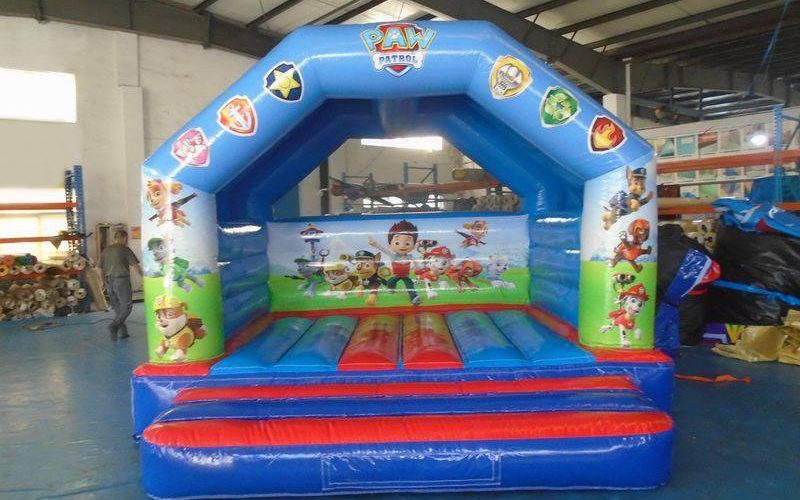
A custom bouncy castle can give a hire business something that local competitors do not offer. It may use an exclusive colour scheme, a distinctive theme or a layout designed for a particular type of booking.
Customisation also creates more decisions. Unlike choosing a standard product, ordering a custom inflatable requires the buyer and manufacturer to agree on the dimensions, materials, artwork, layout and accessories before production begins.
Changes become more difficult once the material has been cut, printed or stitched. Confirming the details at the design stage can prevent delays, additional costs and a finished product that does not suit the way your hire business operates.
Start with the Intended Use
Before discussing colours or artwork, decide how the inflatable will be used.
A castle designed mainly for children’s garden parties may need a compact footprint and a clear, open front. A unit intended for schools, community events or corporate family days may require a larger capacity and a more neutral theme.
Consider the typical age group, venue and booking type. You should also decide whether the inflatable is intended for indoor use, outdoor use or both.
This information can influence the size, entrance design, wall height, internal activities and recommended blower. A clear description of the intended use gives the manufacturer a better starting point than simply requesting a larger or more colourful version of an existing design.
Confirm the Full Dimensions
Overall dimensions should be agreed before production rather than estimated from a photograph.
Confirm the length, width and height of the complete inflatable. Make sure the measurements include any entrance step, slide extension or decorative feature that projects beyond the main structure.
The operating area will normally be larger than the inflatable itself. Additional space may be needed for blowers, inflation tubes, anchoring, safety mats and access around the product.
For indoor bookings, check the typical ceiling height of the halls used by your customers. Beams, lighting and other fixtures may reduce the usable clearance even when the stated room height appears sufficient.
Packed dimensions and weight also matter. Establish whether the finished product will fit your vehicle and storage area and whether your normal delivery team can handle it safely.
A custom inflatable designed around common local venues and your existing transport may provide better long-term value than the largest available option.
Agree on the Layout and Activities
A custom design should be visually attractive, but it must also be practical to operate and supervise.
For a standard bouncy castle, review the entrance position, bouncing area and visibility from the front. For a combination unit, decide where the climbing section and slide will be positioned and how users will move through the inflatable.
A complicated layout may look impressive in a drawing but create hidden areas or make cleaning more difficult. It may also increase the packed weight and setup time.
Look at the design from the perspective of both the user and the operator. Users should be able to move through the product clearly, while the responsible supervisor should have good visibility of the main activity areas.
If the design includes obstacles, tunnels, ball pools or interactive features, confirm their positions and intended age group. Do not assume that every decorative element shown in a concept drawing will also function as a play activity.
Choose Practical Colours
Colour selection affects both appearance and maintenance.
Light colours can create an elegant or premium look, particularly for weddings and indoor events, but they may show grass, mud and marks more easily. Darker colours can be practical in high-contact areas, although they may become warmer in direct sunlight.
Consider where each colour will be used rather than choosing one palette for the entire inflatable. The entrance step, bouncing surface, lower side walls and climbing section usually receive more contact than raised decorative areas.
Check which colours are available as standard PVC material and which effects require printing. A printed colour may look different from a stock material colour, especially under natural light.
If exact colour matching is important, supply recognised colour references and request confirmation before production. Screens can display colours differently, so a digital preview should not always be treated as an exact representation of the finished material.
Supply Suitable Artwork
Custom artwork may include themed graphics, decorative panels, business branding or event-specific designs.
Low-resolution images taken from a website or screenshot may not reproduce clearly when enlarged. Whenever possible, supply vector artwork or a high-resolution original file.
Before approving the artwork, check:
- The correct image or logo version
- The required colours
- The position on the inflatable
- The approximate printed size
- Whether it appears on one side or several sides
- Whether any part crosses a seam or inflatable section
Logos should remain complete and readable. Placing a design across several raised or curved sections may distort it when the inflatable is in use.
If the product uses themed artwork, make sure you have the right to use the supplied images. Recognisable characters, sports teams and entertainment brands may be protected intellectual property.
The final design drawing should show the proposed artwork placement clearly. Review the actual position and scale rather than approving it based only on the theme name.
Check the Material and Construction
A custom appearance should not distract from the construction of the inflatable.
Confirm the material specification, stitching method and reinforcement used in high-wear areas. These may include the entrance, bouncing bed, climbing section, slide connection, blower tubes and anchor-point attachments.
If different materials are used in different sections, find out why. High-contact or load-bearing areas may need additional reinforcement, while decorative sections may not require the same construction.
The design should also allow the product to be cleaned and repaired. Very small decorative shapes, unnecessary corners and complex printed sections can make routine maintenance more difficult.
Close-up photographs of similar completed products can help you understand how the proposed seams, reinforcements and connections will be constructed.
Confirm the Blower, Anchoring and Accessories
The required blower should be confirmed as part of the design rather than selected after production.
Establish how many blowers are needed, what electrical specification is required and where the inflation tubes will be positioned. For a product intended for the UK, the supplied electrical equipment should be suitable for local use.
The blower tubes should allow the equipment to be installed without obstructing the entrance, customer access or normal supervision.
Request a clear anchoring diagram showing the number and position of the anchor points. You should also confirm exactly which accessories are included with the finished product.
Depending on the order, these may include:
- Blower or blowers
- Ground stakes
- Storage bag
- Repair material
- Operating instructions
- Safety or identification labels
Do not assume that every accessory shown in a product photograph is automatically included. The agreed contents should be recorded in the quotation or order confirmation.
Discuss UK Documentation Early
Documentation should be discussed before production, particularly when the inflatable will be used for commercial hire in the UK.
The exact requirements can depend on the design and intended activity. A standard bouncy castle may fall within a different inspection scope from an interactive game or another specialist inflatable.
Confirm what product information, operating instructions and test documentation can be supplied. The details should match the finished product, including its dimensions, blower requirements and identification information.
If you are uncertain whether a custom design will be suitable for a particular UK inspection scheme, speak to a competent inspector before approving production. It is easier to address a design question at this stage than after the inflatable has arrived.
When ordering a custom unit from a manufacturer such as East Inflatables, confirm the material, dimensions, blower requirements, accessories and available documentation as part of the design approval process.
This is more effective than waiting until the order is ready to ship.
Review the Final Design Drawing
A design drawing is not only a colour preview. It is the main opportunity to identify errors before production.
Check every view supplied by the manufacturer. The front may look correct while the side, rear or internal layout still requires changes.
Pay particular attention to:
- Overall dimensions
- Colour placement
- Entrance and exit positions
- Slide or climbing direction
- Artwork size and location
- Blower-tube position
- Anchor-point layout
- Included accessories and quantities
If something is unclear, ask for it to be marked on the drawing. Verbal descriptions can be interpreted differently, especially when several revisions have been discussed.
Keep all approved details in one final version rather than relying on information spread across multiple emails or messages. Production should begin only when the drawing and written specifications agree.
Avoid Late Changes
Late design changes can affect material preparation, printing, cutting and production scheduling.
Changing a small colour area may appear simple, but the relevant material may already have been cut. Moving artwork may require a printed panel to be produced again, while altering the dimensions can affect the entire structure.
Before giving final approval, review the order with anyone involved in operating, marketing or inspecting the product.
It is better to spend an additional day checking the design than to approve it quickly and request changes after production has started.
If a late change is unavoidable, confirm whether it will affect the price, production time or delivery date before proceeding.
Inspect the Finished Product Before Shipment
Once production is complete, request clear photographs and an inflation video before shipment.
The final review should confirm that the product matches the approved design, including its colours, artwork, layout and visible accessories.
Check that the inflatable holds its intended shape and that the entrance, slide, blower tubes and other features appear in the agreed positions.
This review does not replace the appropriate inspection or testing process, but it provides an opportunity to identify obvious differences before the product leaves the factory.
Also confirm the packed dimensions, weight, number of packages and shipping marks. These details will help you prepare for delivery, unloading and storage.
A Clear Approval Process Produces Better Results
A successful custom bouncy castle order depends on clear communication before production.
Start with how the product will be used, then confirm the dimensions, layout, colours, artwork and construction. Blower requirements, anchoring, accessories and documentation should be agreed at the same stage rather than left until the end.
The final drawing should bring all these decisions together in one approved version.
A custom inflatable should do more than look different. It should fit your venues, vehicle, storage space and daily working routine. Confirming these details early gives the manufacturer a clearer production brief and gives your hire business a product that is easier to operate over the long term.