
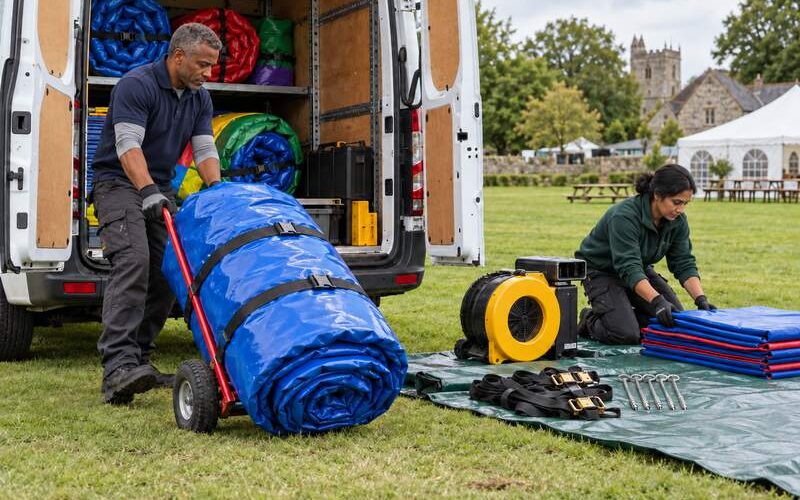
For a busy bouncy castle hire business, time spent loading, travelling, setting up and collecting equipment can quickly become one of the largest operating costs.
A single booking may be straightforward, but several deliveries on the same morning can create delays. Narrow access, missing accessories, unsuitable surfaces and poorly packed equipment can all disrupt the schedule.
Working faster should never mean skipping safety checks or rushing an installation. The aim is to create a consistent system that removes avoidable delays while allowing every inflatable to be set up correctly.
Here are six practical ways to make bouncy castle setup and collection more efficient.
1. Confirm the Site Details Before the Booking Day
Many delays begin before the vehicle arrives at the venue.
A customer may provide the delivery address but forget to mention narrow gates, steps, limited parking or a long distance between the vehicle and the setup area. An inflatable that fits in the garden may not fit through the available access.
Before confirming the booking, ask for:
- The full address and postcode
- Indoor or outdoor use
- Grass or hard-standing surface
- Available setup space
- Gate and doorway widths
- Steps, slopes or narrow paths
- Distance from parking to the setup area
- Nearby electrical supply
- Venue access and closing times
- Preferred delivery and collection windows
For indoor bookings, confirm the ceiling height and check for beams, lights or other overhead obstructions. The stated height of the room may not represent the usable clearance across the entire setup area.
Photographs of the access route and intended setup position can help identify problems before the booking day. For more complicated venues, a short site visit may save considerably more time later.
It is also useful to send the customer a brief preparation reminder. Ask them to clear the setup area, remove garden furniture and unlock gates before the delivery team arrives.
A few minutes spent confirming these details can prevent a much longer delay at the venue.
2. Create a Consistent Vehicle Loading System
The order in which equipment is loaded affects how quickly it can be unloaded.
If the first inflatable required is placed behind equipment for several later bookings, the team may need to remove and reload other items before beginning the setup.
Plan the loading order according to the delivery route. Equipment for the first booking should normally be the easiest to access, while products required later can be positioned further inside the vehicle.
Keep commonly used equipment in consistent locations, including blowers, ground stakes, safety mats, extension leads, ground sheets, anemometers, cleaning materials and handling equipment.
Use suitable restraints to prevent items from moving during transport. Loose blowers, stakes and bags can slow down unloading and may damage other equipment.
Before leaving the storage area, complete a quick load check for every booking. Confirm that the correct inflatable, blower and required accessories are all in the vehicle.
A simple loading list can prevent an unnecessary return journey for one missing item.
3. Keep Each Inflatable’s Equipment Together
Searching through a mixed collection of blowers, stakes, ropes and mats wastes time.
Where practical, organise the equipment for each inflatable as a set. Use clearly marked storage bags or durable tags so staff can identify the correct unit without opening several packages.
A complete set may include:
- The inflatable
- The correct blower or blowers
- Required anchoring equipment
- Safety mats
- Ground sheet
- Operating information
- Small repair materials
If some equipment is shared between several products, store it in a clearly organised section of the vehicle rather than allowing it to move between unmarked bags.
A simple colour-coding system can also help. One colour could identify blower cables, another anchoring equipment and another cleaning supplies. The system does not need to be complicated; it only needs to be understood by everyone handling the equipment.
After every collection, return each item to its assigned position. An organisation system only saves time when it is followed consistently.
4. Use Suitable Handling Equipment and Enough Staff
Commercial bouncy castles can be heavy and difficult to move, particularly when they are wet.
Trying to handle a large inflatable without suitable equipment may slow the job and increase the risk of injury or product damage.
Useful handling equipment may include a heavy-duty sack truck, platform trolley, loading ramp, lifting straps, protective gloves and securing straps.
Check the packed dimensions and weight of every inflatable in your fleet. This will help you decide which products can be handled by one person and which require additional staff.
Large combination units, slides and obstacle courses may need more than one person for loading, positioning and rolling. Sending a second team member can sometimes complete the booking more efficiently than expecting one person to manage the entire setup.
Staff should also understand where to hold and move each product. Pulling an inflatable by an anchor point, blower tube or decorative section can damage the equipment.
Suitable handling equipment does not remove the need for correct lifting techniques, but it can make regular deliveries more manageable and consistent.
5. Follow the Same Setup Sequence Every Time
A standard setup routine helps prevent missed steps and unnecessary movement around the site.
The exact process should follow the operating instructions for the inflatable, but a typical sequence may include:
- Confirm the setup position and inspect the area.
- Check the surface and surrounding clearance.
- Move the packed inflatable into position.
- Place the ground sheet where required.
- Unroll and orientate the inflatable correctly.
- Connect the appropriate blower.
- Inflate the unit and check its condition.
- Secure every required anchor point.
- Position safety mats and protect cables.
- Complete the necessary operating checks.
Avoid inflating the unit before confirming its orientation. Turning a large inflated product can take far longer than positioning it correctly while it is still packed.
The team should know where the entrance, blower tubes and anchoring points will be before unrolling the inflatable.
Keep the operating instructions and required inspection information accessible. Staff should not have to search through emails or storage boxes at the venue.
A written setup checklist can be particularly useful for new employees. Over time, following the same routine becomes faster without important checks being forgotten.
6. Make Collection Part of the Setup Plan
An efficient collection begins during delivery.
Before leaving the venue, consider how the inflatable will be removed later. Keep the access route clear and confirm the collection arrangements with the customer or venue manager.
When returning for collection, first check that all users have left the inflatable and that the surrounding area is clear. Follow the correct shutdown and deflation procedure for the product.
Before packing, inspect the inflatable for mud, grass, food and drink spills, excess moisture, loose accessories and visible damage.
Remove light dirt before rolling whenever practical. Packing a heavily soiled inflatable can transfer dirt across the material and increase cleaning time at the storage area.
Use a consistent folding and rolling method. A compact, even roll is easier to load, transport and store, and is more likely to fit properly into its transport bag.
Keep stakes, mats, blowers and cables separate from the inflatable during packing. Metal items should never be rolled inside the PVC, as they may damage the material.
If an inflatable is wet, record that it requires drying before storage or its next booking. Packing is not the final step if moisture remains inside or on the material.
Complete a collection check before leaving the venue. Confirm that no blower, stake, mat, cable or storage bag has been left behind.
Small Improvements Add Up During a Busy Season
The greatest time savings often come from several small improvements rather than one major change.
Keeping vehicle equipment in fixed positions, requesting access photographs, labelling blowers and preparing a small spare-equipment kit may each save only a few minutes. Across several bookings every weekend, those minutes can make a significant difference.
A more organised routine can reduce overtime, unnecessary mileage and pressure on the delivery team. It also provides additional flexibility when a customer is late, venue access is restricted or another booking takes longer than expected.
Review the process at the end of busy weekends. If the same delay occurs repeatedly, look for a practical change that can prevent it next time.
Efficiency Should Never Replace Safety
Time should be saved through preparation, organisation and experience—not by skipping safety procedures.
Do not reduce setup time by using fewer anchor points, ignoring unsuitable weather, using the wrong blower or leaving before the required checks have been completed.
Every inflatable should be installed according to its operating instructions and assessed for the actual venue and weather conditions. If the site, surface, space or conditions are unsuitable, keeping to the delivery schedule should not take priority over safe operation.
Professional operators allow enough time to complete every setup correctly.
Build a Faster Routine, Not a Rushed One
Faster bouncy castle setup and collection begins with good organisation.
Confirming site details in advance, loading the vehicle in delivery order and keeping accessories organised can remove many avoidable delays. Suitable handling equipment, a consistent setup sequence and an efficient packing method can then make each booking easier to manage.
The objective is not to rush. It is to reduce wasted time while maintaining the same careful installation and inspection process at every venue.
A well-organised routine helps the team complete more bookings, reduces physical effort and makes busy weekends easier to control.