
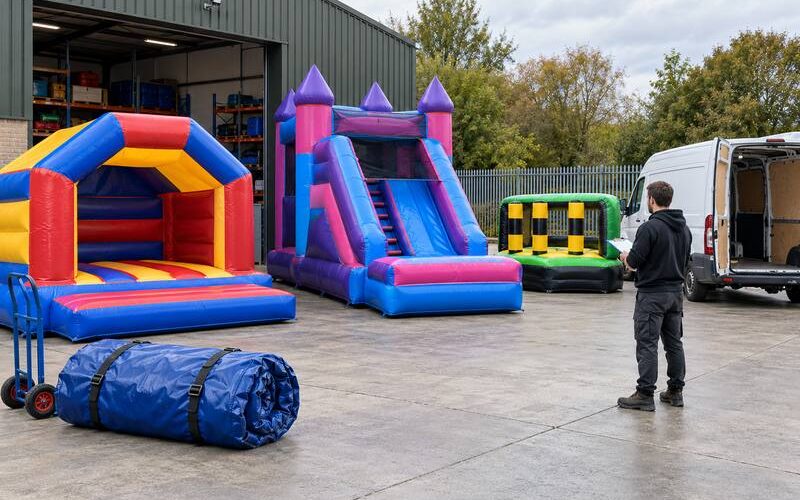
Starting a bouncy castle hire business does not mean buying a large collection immediately. Many operators begin with one or two carefully chosen inflatables and expand after learning what customers in their area actually want.
The right number depends on your budget, target market, vehicle, storage space and ability to manage deliveries, cleaning and maintenance.
Buying too few products may limit your bookings. Buying too many before proving demand can leave money tied up in equipment that rarely leaves storage. The goal is to start with a manageable range and grow in response to genuine enquiries.
Can You Start With One Bouncy Castle?
Yes, you can start a hire business with one commercial bouncy castle.
This keeps the initial investment lower and allows you to learn how the business works. You can gain experience in:
- Handling enquiries and bookings
- Delivering and collecting equipment
- Setting up and anchoring the inflatable
- Cleaning and drying it after use
- Managing inspections and maintenance
- Working with different venues
However, relying on one inflatable also has limitations:
- You can accept only one booking at a time
- Customers have no alternative sizes or designs
- A repair may temporarily stop all bookings
- The product may not fit every venue
- You may lose bookings when popular dates overlap
If you start with one unit, choose a versatile commercial design suitable for common birthday parties, garden events and indoor venues. A general party theme or interchangeable artwork may appeal to more customers than a highly specific design.
Starting with one inflatable is most suitable for testing the local market or operating the business part-time.
Are Two or Three Inflatables a Better Starting Point?
For many new UK hire businesses, two or three inflatables provide a more practical starting range.
This gives customers some choice without making the fleet too difficult to transport, store and maintain. It also allows you to accept more than one booking on the same day.
A balanced three-product starter range might include:
- A standard bouncy castle
- A bouncy castle with a slide
- A low-height or differently sized inflatable
The standard castle can cover straightforward birthday bookings and smaller venues. A castle with a slide provides an additional play feature and may support a higher hire price. A low-height unit can open up more indoor bookings.
This combination also gives you an alternative if one inflatable is unavailable for cleaning, inspection or repair.
When Does a Five-Unit Fleet Make Sense?
Starting with four or five inflatables may be suitable if you already understand the local market and have enough storage, transport and staff.
A possible five-unit range could include:
- Two standard bouncy castles
- Two bouncy castle and slide combinations
- One larger inflatable game or obstacle course
The exact mix should reflect your intended customers. A business serving young children’s parties will need a different fleet from one targeting schools, community events and corporate bookings.
Before purchasing five units, consider whether you have:
- A suitable delivery vehicle
- Dry and secure storage
- Enough staff for busy weekends
- Space for cleaning and drying
- Sufficient blowers and anchoring equipment
- A reliable booking and delivery system
- Enough working capital for inspections and operating costs
More products can create additional booking opportunities, but they also increase the workload involved in transport, inspection, cleaning and maintenance.
Choose a Product Mix, Not Just a Number
The number of inflatables matters less than whether they form a useful range.
Buying several castles in almost identical sizes, colours or themes may not provide much extra choice. If one product cannot fit a customer’s venue, the others may not fit either.
A stronger starter fleet can serve different requirements, such as:
- Smaller and larger venues
- Indoor and outdoor bookings
- Different age groups
- Standard bouncing and slide combinations
- Neutral and themed events
- Different hire price levels
Each inflatable should have a clear purpose.
Before ordering, ask what type of booking the product will allow you to accept. If it does not serve a different customer, venue or price point, it may be better to delay the purchase.
Start With Versatile Designs
New operators are sometimes tempted to choose products based on personal preference rather than local demand.
Highly specific themes can be popular, but they may appeal to a limited number of customers. General party themes, multicoloured designs and removable artwork panels usually offer more flexibility.
Look for early products that can be used for:
- Birthday parties
- School events
- Community celebrations
- Family gatherings
- Indoor hall bookings
- General outdoor events
Specialised themes can be added later when your booking history shows what customers are regularly requesting.
Include an Inflatable Suitable for Indoor Venues
Indoor bookings are particularly valuable in the UK, where unsuitable weather can affect outdoor events.
Community halls and sports centres may have limited ceiling height, narrow doorways and restricted floor space. At least one early purchase should ideally fit several local indoor venues.
Before ordering, research halls in your service area and record:
- Floor dimensions
- Ceiling height
- Door width
- Access routes
- Available power points
- Setup and collection times
- Equipment restrictions
Remember that the inflatable’s external dimensions are not the total operating area. You also need space for the blower, inflation tube, safety mats, anchoring system and appropriate clearance.
A product that fits many local halls can generate bookings throughout more of the year.
Define Your Target Customers
Your first products should reflect the customers you intend to serve.
Smaller castles may suit younger children and compact venues. Larger slide combinations and obstacle courses may appeal to older children, schools and larger events.
Trying to serve every age group immediately can make your first order unnecessarily expensive. It is often better to focus on one clear market and expand later.
For example, a business targeting children’s birthday parties might begin with:
- A standard castle for general bookings
- A castle with a slide for mixed party groups
- A low-height model for indoor venues
A business targeting schools and public events may need larger equipment, additional staff and greater transport capacity from the beginning.
Check Your Vehicle Capacity
Commercial bouncy castles can be heavy and bulky when packed.
Before buying several units, confirm that your vehicle can carry the inflatables, blowers, ground sheets, stakes, mats and other equipment needed for each booking.
Ask for the packed dimensions and weight of every product. Do not estimate transport requirements from its inflated size.
Consider:
- Vehicle payload
- Available load space
- Loading height
- Safe load securing
- Space for trolleys and accessories
- The number of staff required for handling
A large inflatable may generate a higher hire price, but it may also require a larger vehicle, more staff and longer setup times.
Plan Your Storage Before Buying
Every inflatable needs dry and secure storage.
A garage may be enough for a small starter fleet, but the available space can fill quickly once blowers, ground sheets, stakes, trolleys and cleaning equipment are included.
Your storage area should allow you to:
- Keep inflatables away from damp floors
- Separate clean equipment from wet returns
- Access individual units without moving everything
- Store blowers and accessories safely
- Protect equipment from sharp objects and pests
You will also need a suitable plan for drying inflatables after wet bookings. Packing them away while damp can lead to mould, staining and unpleasant odours.
Calculate your storage capacity before purchasing additional products.
Keep Part of the Budget for Operating Equipment
Do not spend the entire startup budget on inflatables.
A new hire business may also need:
- Commercial blowers
- Suitable anchoring equipment
- Safety mats
- Ground sheets
- Trolleys and lifting equipment
- Electrical equipment
- Cleaning supplies
- Repair materials
- Insurance
- Annual inspections
- Vehicle expenses
- A website or booking system
Starting with fewer suitable inflatables and keeping money available for safe operation is often more practical than buying a large fleet with no remaining operating budget.
Allow for Cleaning, Inspection and Repairs
Even a well-maintained inflatable may occasionally be unavailable because of cleaning, inspection or repair.
A business with only one unit is particularly vulnerable to downtime. With two or three complementary products, you may be able to offer a suitable alternative.
This does not mean every new business needs duplicate products. Choose a range with some overlap instead.
For example, a standard castle and a compact slide combination may both suit general birthday bookings. If one is unavailable, the other may still meet the customer’s needs.
As the business grows, adding a second popular general-purpose unit can improve availability during busy periods.
Use Enquiry Data to Decide What to Buy Next
Do not assume that products popular in another town will perform equally well in your area.
Record every enquiry, including bookings you cannot accept. Useful details include:
- Requested date
- Customer location
- Venue type
- Available space
- Age group
- Preferred theme
- Requested product
- Reason the booking was declined
Patterns should begin to appear over time.
If customers regularly ask for indoor castles, a low-height model may be the next sensible purchase. If slide combinations are booked first, adding another may increase capacity. If you repeatedly decline school events, an obstacle course or interactive game could open a new market.
Expand according to missed bookings and confirmed demand rather than guesswork.
Avoid Buying Too Many Similar Themes
Several highly specific themed castles can reduce the flexibility of a new fleet.
Themes may go in and out of fashion, and some artwork appeals to only a narrow age group. Customers may also reject an available castle because it does not match their event.
A more flexible early range could include:
- One colourful general party design
- One neutral or celebration-themed design
- One castle with interchangeable artwork
- One product with a different play feature
Add more specialised themes once customer enquiries show which designs are likely to receive regular bookings.
When Should You Expand the Fleet?
Consider buying another inflatable when:
- You regularly turn away bookings on the same dates
- One product is booked much more often than the others
- Customers repeatedly request a size or feature you do not offer
- You have enough storage and vehicle capacity
- Your existing products are producing consistent income
- You have the staff to operate another unit safely
- The purchase will not affect essential operating costs
Do not expand only because the first few bookings were successful. Seasonal demand may create a temporary increase that does not continue throughout the year.
Look for repeated demand before committing to another purchase.
A Practical Starting Recommendation
There is no single correct number for every business, but this guide can help:
One Inflatable
Suitable for testing the market, operating part-time or starting with a limited budget. Choose a versatile design and understand that booking capacity and backup options will be limited.
Two or Three Inflatables
A practical starting point for many new hire businesses. This provides customer choice, allows some overlapping bookings and reduces reliance on one product.
Four or Five Inflatables
Suitable when you have confirmed demand, appropriate storage, a suitable vehicle and enough staff to manage several bookings.
More Than Five Inflatables
Usually more appropriate for an established operator or someone entering the market with previous experience, sufficient capital and a clear customer base.
The best starting number is the number you can transport, store, clean, inspect and operate correctly.
Final Thoughts
You do not need a large collection of bouncy castles to start a hire business in the UK.
One versatile inflatable can be enough to test the market. For many new operators, two or three complementary products provide a more flexible starting range. A larger fleet should be considered only when the storage, transport, staffing and customer demand are in place.
Choose products that serve different venues and customers rather than buying several similar designs. Keep part of your budget available for essential equipment and operating costs, and use real enquiry data to decide what to purchase next.
Starting carefully allows you to learn the market, protect your investment and build a fleet based on demand rather than guesswork.